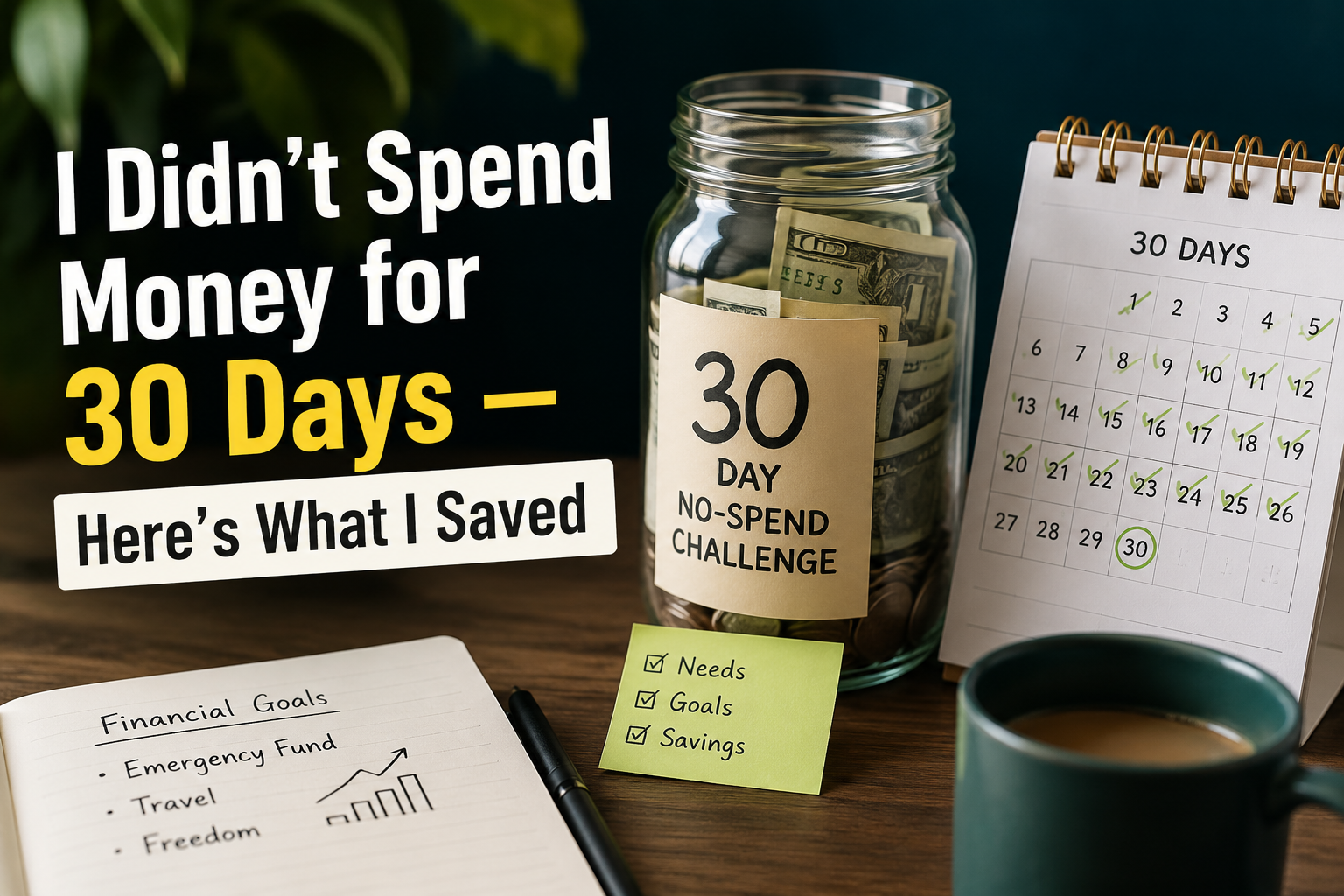
Imagine going an entire month without buying coffee on the way to work, ordering food online, browsing shopping apps late at night, or making those “it’s only a few hundred rupees” purchases that quietly add up. It sounds restrictive at first, but a 30-day no-spend challenge is less about deprivation and more about understanding your relationship with money.
The goal isn’t to avoid every expense. Essential bills like rent, utilities, groceries, transportation, insurance, and medical needs still count as necessary spending. The challenge is to eliminate non-essential purchases for 30 days and observe what changes—not just in your bank account, but in your mindset.
I decided to try exactly that. What started as a financial experiment quickly became a lesson in habits, priorities, and self-control. Here’s what I learned and, more importantly, what I actually saved.
Why I Started a No-Spend Challenge
Like many people, I wasn’t struggling with major financial problems. I paid my bills on time and managed to save occasionally. But despite earning enough, I often wondered where my money disappeared each month.
Small purchases were the biggest culprit.
A premium coffee here.
A food delivery there.
A subscription I barely used.
Impulse purchases during online sales.
None of them seemed expensive individually. Together, they quietly drained thousands every month.
Instead of creating another complicated budget spreadsheet, I wanted something simple: spend nothing unnecessary for 30 days.
The rules were straightforward:
- Buy only essentials.
- No online shopping.
- No eating out.
- No entertainment purchases.
- No impulse spending.
- Use what I already owned whenever possible.
Week One: The Reality Check
The first week was surprisingly difficult.
Without realizing it, I had developed automatic spending habits. Whenever I felt bored, I’d open shopping apps. If I felt tired after work, ordering food felt easier than cooking. Weekend outings almost always involved spending money.
Removing those options felt uncomfortable.
What surprised me most wasn’t missing the purchases—it was noticing how often I wanted to spend.
That awareness alone was eye-opening.
Instead of buying coffee every morning, I made it at home.
Instead of ordering dinner, I cooked with groceries already sitting in my kitchen.
Instead of shopping online, I read books I had purchased months ago but never opened.
Week Two: Creativity Replaced Consumption
Once the initial temptation faded, something interesting happened.
I became more resourceful.
Instead of buying new clothes, I mixed outfits I already owned.
Instead of paying for entertainment, I watched free documentaries, visited public parks, and spent more time talking with friends.
I even started repairing small household items instead of replacing them immediately.
The challenge shifted from asking:
“What can I buy?”
to asking:
“What can I use?”
That small change in thinking saved money without making life feel empty.
Week Three: Hidden Expenses Became Obvious
By the third week, patterns emerged.
I realized that convenience had become expensive.
Food delivery charges.
Platform fees.
Impulse add-ons.
Express shipping.
Premium upgrades.
These weren’t things I consciously valued. They simply happened because they were easy.
Cooking meals in advance eliminated delivery fees.
Walking to nearby places reduced fuel costs.
Planning purchases removed expensive last-minute decisions.
The savings weren’t coming from one major sacrifice—they came from eliminating dozens of tiny leaks.
Week Four: Spending Lost Its Emotional Pull
The final week felt surprisingly normal.
I no longer checked shopping websites for entertainment.
I stopped feeling like I needed something new every weekend.
Marketing emails became easier to ignore.
The challenge proved something important: many purchases are driven by emotion rather than necessity.
Stress.
Boredom.
Excitement.
Loneliness.
Celebration.
Companies understand these emotions extremely well. That’s why flash sales, limited-time offers, and personalized recommendations are so effective.
Stepping away from constant buying made those tactics much less powerful.
What I Actually Saved
The financial savings were significant.
While the exact amount will vary for everyone, my spending dropped dramatically in several categories.
Food delivery: Nearly eliminated.
Coffee and snacks: Almost zero.
Impulse shopping: Completely avoided.
Entertainment spending: Reduced substantially.
Subscription renewals: I cancelled services I wasn’t using.
By the end of the month, I had saved enough money to cover nearly an entire month’s emergency fund contribution.
What impressed me wasn’t the total amount—it was realizing that most of those expenses hadn’t genuinely improved my quality of life.
The Biggest Savings Weren’t Financial
Money was only one part of the experiment.
The larger benefits were psychological.
Less Financial Stress
Knowing exactly where my money was going removed a surprising amount of anxiety.
Instead of wondering whether I could afford something, I knew.
That clarity was valuable.
Better Spending Habits
The challenge introduced a simple habit that I still use today.
Before buying anything, I ask myself three questions:
- Do I actually need this?
- Will I still want it next month?
- Is there something I already own that serves the same purpose?
Many purchases don’t survive those questions.
Greater Appreciation
When you stop buying constantly, the things you already own become more valuable.
Clothes last longer.
Kitchen equipment gets used.
Books get finished.
Electronics become tools instead of excuses to upgrade.
Contentment often comes from using what you have rather than constantly replacing it.
More Time
Shopping consumes more time than we realize.
Browsing websites.
Comparing products.
Reading reviews.
Tracking deliveries.
Returning unwanted items.
Removing unnecessary purchases freed up hours every week.
I used that time for reading, exercising, and learning new skills—activities that delivered longer-lasting rewards than another online order ever could.
Would I Do It Again?
Absolutely.
Not because spending money is bad, but because spending intentionally is better.
A no-spend month isn’t about becoming extremely frugal forever. It’s about pressing the reset button.
After completing the challenge, I returned to normal spending—but with a completely different perspective.
Now, purchases are planned instead of impulsive.
Dining out feels like an experience instead of a habit.
Online shopping is occasional rather than automatic.
Most importantly, I no longer confuse spending with happiness.
Final Thoughts
A 30-day no-spend challenge won’t solve every financial problem, but it can reveal habits that traditional budgeting often misses.
For many people, the greatest obstacle to saving isn’t income—it’s unconscious spending.
By temporarily removing non-essential purchases, you create space to evaluate what genuinely adds value to your life.
At the end of my 30 days, I had more money in my bank account, fewer unnecessary possessions, and a healthier relationship with spending. The experiment reminded me that financial freedom isn’t always about earning more. Sometimes, it’s simply about spending with greater intention.
If you’ve ever looked at your bank statement and wondered where your money went, consider trying a no-spend month yourself. You may discover that what you save extends far beyond your wallet.