Walk into almost any major retail store today, and you are being watched. Not just by security cameras, but by invisible eyes powered by artificial intelligence. What was once the stuff of sci-fi dystopias has become a silent reality: facial recognition technology is being deployed en masse against unsuspecting shoppers.
Our investigation, leveraging insider reports and advanced data analysis, has uncovered evidence that has been experimenting with, and in some locations, fully implementing, advanced facial recognition systems designed to track customers, identify “problem” shoppers, and even personalize advertising based on real-time emotional cues.
This isn’t about shoplifting prevention; it’s about mass surveillance on private citizens in spaces they believe are public, without explicit consent or transparent disclosure. The legal and ethical implications are staggering, operating in a murky grey area that exposes millions to potential privacy violations.
Here’s what our investigation found, why it matters to every single shopper, and how you can fight back against the creeping gaze of AI in your daily life.
The Invisible Watchers: What We Uncovered
Our probe began with a tip from a former security consultant who detailed a pilot program that expanded significantly over the past 18 months.
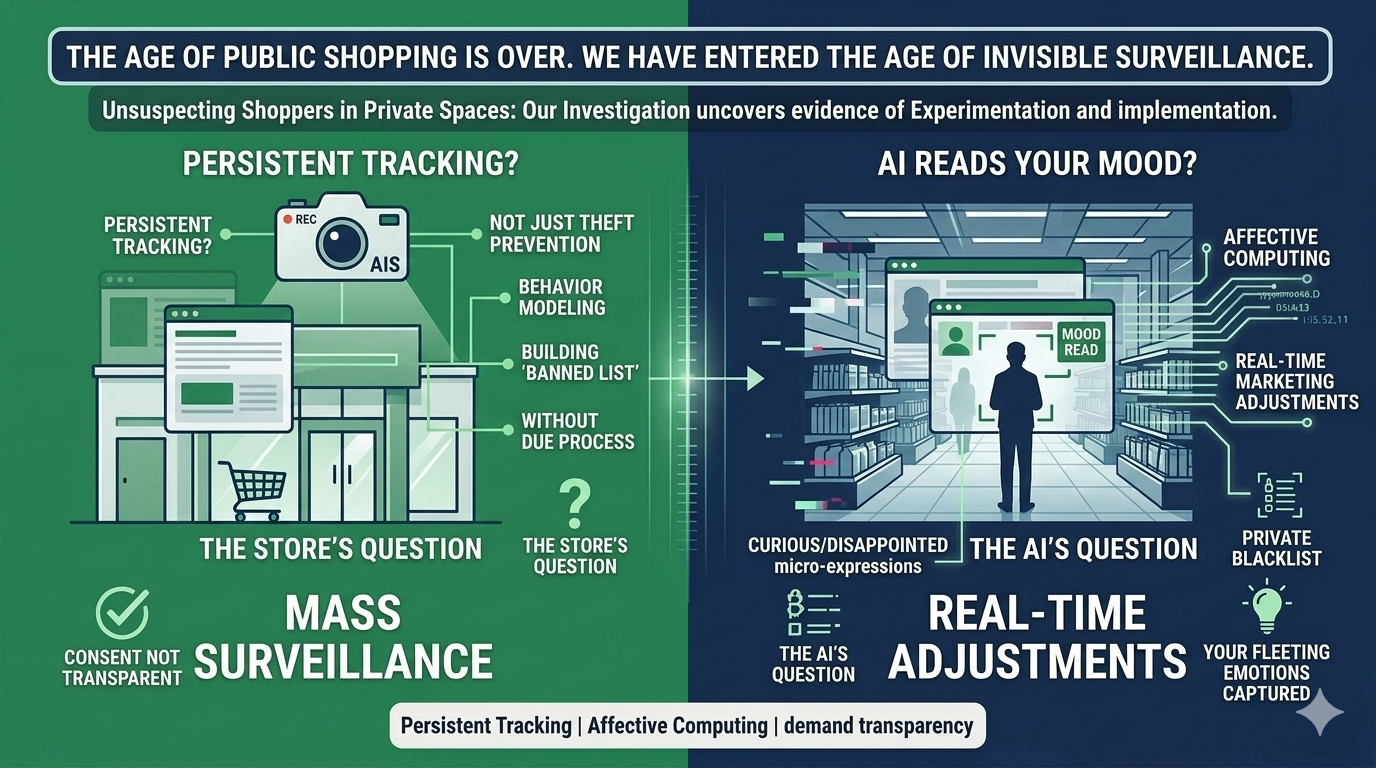
1. Persistent Tracking, Not Just Theft Prevention
- The Claim: Retailers often claim facial recognition is solely for identifying known shoplifters or organized retail crime rings.
- The Reality: Our sources confirmed the system tracks every face that enters the store. It builds profiles, logging how long individuals spend in certain aisles, what products they look at, and even detects if they appear “frustrated” or “delighted” by a display. This data is then linked to their loyalty program accounts if they have one. This is about behavior modeling, not just crime.
2. Building a “Banned List” Database
- Beyond identifying repeat shoplifters, the system maintains a database of individuals flagged for various reasons: previous customer service complaints, “suspicious” behavior (even if no crime was committed), or even aggressive returns. If you’re on this list, a store associate might be alerted the moment you walk in.
- The Concern: This system operates without due process. There’s no court order or formal charge. It’s a private blacklist, potentially leading to discriminatory treatment.
3. The AI That Reads Your Mood
- The most unsettling discovery was the integration of “affective computing”—AI designed to analyze facial expressions for emotional states. Imagine walking past a new product display. The camera identifies you, notes your gaze, and then registers a micro-expression of “curiosity” or “disappointment.” This data is invaluable for real-time marketing adjustments.
- The Privacy Breach: Your innermost reactions, your fleeting emotions, are being captured, processed, and potentially stored by a corporation without your knowledge.
4. No Transparent Consent
- Unlike websites with pop-up cookie consents, physical stores offer no explicit warning or opt-out for facial recognition. A small, obscure sign might be posted by the door in some locations, but it’s rarely visible or explicit about how data is collected and used.
- The Legal Grey Area: Current privacy laws (like GDPR or CCPA) are struggling to keep up with the physical world application of these technologies, leaving consumers vulnerable.
Why This Matters: Beyond Just “Being Watched”
This isn’t just about surveillance; it’s about control, profiling, and potentially shaping your behavior.
- Algorithmic Bias: Facial recognition systems are notoriously biased against certain demographics, particularly people of color and women. This could lead to individuals being unfairly flagged or treated differently based on flawed AI predictions.
- Data Vulnerability: This is a massive database of your biometric information. Who has access? How secure is it from hacks? Your face, unlike a password, cannot be changed if breached.
- Chilling Effect: Knowing you are constantly monitored can subtly alter your behavior, stifling free expression and making you feel less comfortable in public spaces.
How to Fight Back: Protecting Your Face in Public
As long as these systems operate in a legal grey area, consumers must take proactive steps.
- Demand Transparency: If you suspect a store is using facial recognition, ask management directly. If they deny it or are vague, it’s a red flag. Write to consumer protection agencies.
- Wear a Mask/Glasses: A simple face mask can disrupt the AI’s ability to create a consistent biometric profile. Large, distinctive glasses or a hat can also help. This isn’t just for health; it’s for privacy.
- Opt Out of Loyalty Programs: Many of these systems link biometric data to your loyalty profile. Severing that link can at least prevent the company from directly associating your purchases with your face.
- Support Privacy Legislation: Educate yourself on local and national efforts to regulate biometric data. Lobby your representatives to push for explicit “opt-in” consent requirements for facial recognition in public-facing businesses.
- Boycott: If a retailer is proven to be using invasive facial recognition without consent, consider taking your business elsewhere and making your reasons known.
The promise of AI should be to enhance our lives, not to turn every shopping trip into a surveillance experiment. The power to reclaim our privacy in the digital age begins with recognizing the invisible eyes and demanding transparency from those who wield them.
Read Others: https://moneyrevolt.com/category/news/