For many companies registered under the Companies Act, 2013, compliance failures do not always arise from deliberate non-compliance. In several cases, companies miss statutory filings because of operational difficulties, changes in management, lack of professional guidance, financial constraints or simply because compliance requirements were overlooked.
However, once annual returns, financial statements and other mandatory forms remain pending for years, the consequences can become significant. Additional fees accumulate, directors face regulatory exposure, and companies may find themselves unable to complete routine corporate actions.
Recognising this practical difficulty, the Ministry of Corporate Affairs (MCA) has periodically introduced compliance revival schemes aimed at giving defaulting companies an opportunity to regularise their filings.
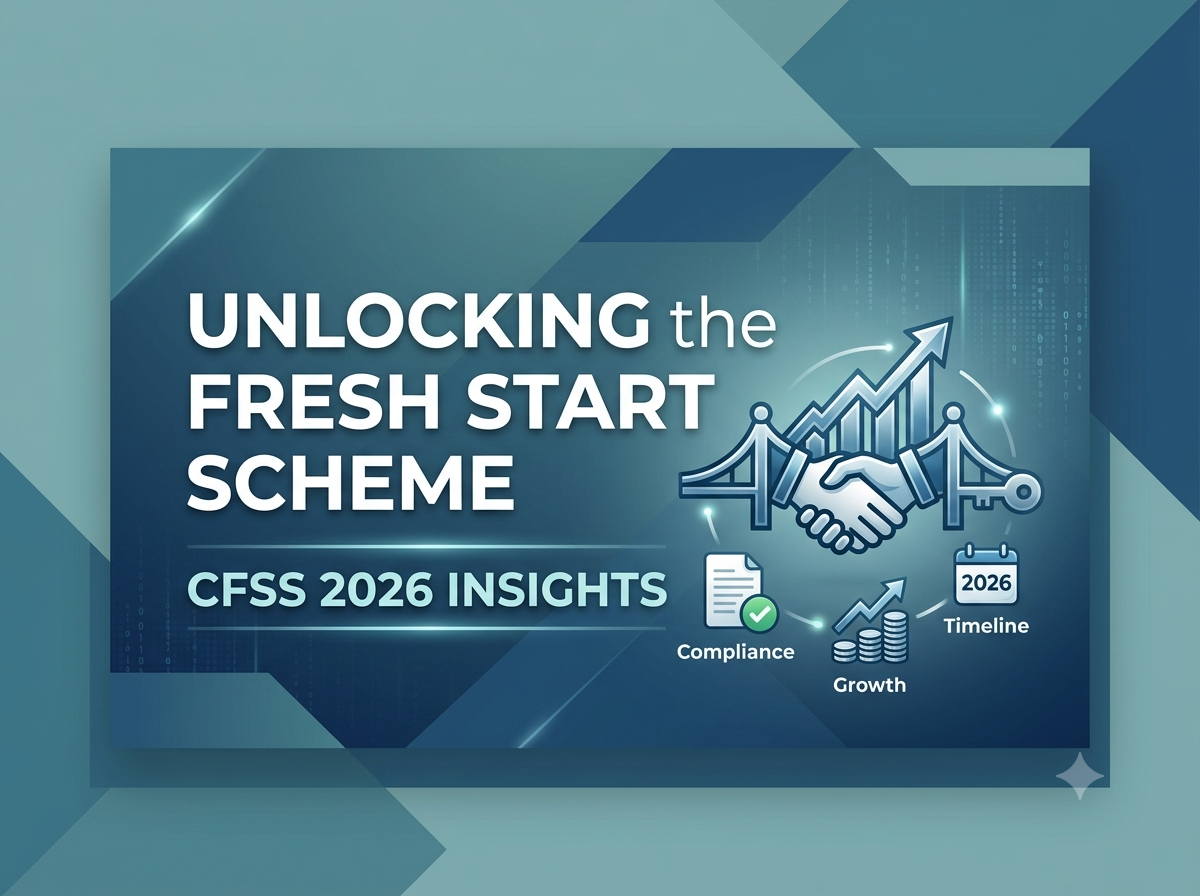
The latest initiative, Companies Compliance Facilitation Scheme, 2026 (CFSS 2026), continues this regulatory approach by providing eligible companies a structured opportunity to complete pending compliances and restore their statutory position.
However, like every MCA scheme, CFSS 2026 is not a blanket waiver for all companies. Understanding who can use the scheme, what benefits are available and what limitations exist is essential before relying on it.
Why Did MCA Introduce CFSS 2026?
The compliance framework under the Companies Act, 2013 requires companies to file several documents periodically, including:
- Annual returns.
- Financial statements.
- Event-based filings.
- Changes in directors or share capital.
- Various disclosures required under company law.
For active companies, maintaining compliance is generally part of routine operations. However, many small and closely held companies accumulate defaults due to administrative neglect rather than intentional violation.
When filings remain pending, companies often face a chain reaction:
- Additional filing fees increase substantially.
- Directors become concerned about personal liability.
- Investors and lenders raise compliance concerns.
- Corporate restructuring becomes difficult.
- The company’s status on MCA records may create uncertainty.
Earlier schemes introduced by MCA demonstrated that a compliance opportunity can encourage companies to return to the formal regulatory system rather than allowing them to remain inactive or non-compliant.
CFSS 2026 follows the same philosophy: encouraging companies to correct historical defaults while improving the overall quality and accuracy of MCA records.
Understanding the Concept of a Fresh Start Scheme
A fresh start scheme does not mean that companies are completely released from all legal obligations.
The purpose is not to erase violations. Instead, it provides a limited compliance window during which eligible companies can file pending documents under relaxed conditions.
A typical MCA compliance scheme works on three principles:
- Opportunity for correction
Companies receive a chance to complete pending filings. - Reduction of financial burden
Additional fees or penalties may be reduced or waived according to the scheme conditions. - Improvement of regulatory records
MCA databases become more accurate because companies regularise their pending information.
Therefore, CFSS 2026 should be viewed as a compliance rehabilitation mechanism rather than an amnesty from all company law responsibilities.
Who Can Benefit From CFSS 2026?
The primary beneficiaries of CFSS 2026 are companies that have failed to complete mandatory filings within prescribed timelines.
These may include companies that:
- Have pending annual filings.
- Have delayed statutory submissions.
- Are operational but have compliance gaps.
- Want to regularise records before future business activities.
For example, a private company incorporated in 2019 may have conducted business regularly but failed to file annual returns and financial statements for certain financial years due to changes in management.
Instead of allowing the default to continue indefinitely, the company can use the scheme window to complete pending filings and bring its records up to date.
Is CFSS 2026 Available to Every Company?
No.
MCA compliance schemes generally contain specific eligibility conditions and exclusions.
Certain categories of companies may not be eligible depending on the scheme notification. These restrictions are important because companies cannot assume that every default can be cured through CFSS 2026.
Common categories that may face restrictions under such schemes include:
- Companies already marked for strike-off.
- Companies that have already filed applications for closure.
- Companies involved in certain regulatory proceedings.
- Companies against which prosecution matters are pending.
- Companies excluded specifically under the scheme notification.
The exact applicability must always be checked against the final MCA notification and conditions.
A company should not proceed merely because it has pending filings. Eligibility depends on the legal status of the company at the relevant time.
What Types of Defaults Can CFSS 2026 Address?
The major objective of CFSS 2026 is expected to address delayed statutory filings.
These may include filings relating to:
- Annual compliance documents.
- Financial statements.
- Annual returns.
- Certain event-based forms.
The scheme is particularly relevant for companies that have remained technically alive but have accumulated filing defaults.
For example:
A company incorporated in 2020 continues business operations but failed to file annual returns for two years. Due to accumulated additional fees, the directors delayed compliance further.
Under a fresh start mechanism, the company may obtain an opportunity to complete those filings under the scheme conditions instead of allowing the default to continue.
CFSS 2026 and the Difference Between Default and Inactive Companies
One of the most important distinctions is between:
- A company that is active but has compliance defaults; and
- A company that has effectively stopped functioning.
A fresh start scheme is generally intended for companies that want to regularise themselves and continue legally.
A company that has no business activity, no intention to continue operations or wishes to exit the corporate system may require a different approach, such as voluntary strike-off under Section 248.
Directors should therefore first determine the company’s future intention.
The compliance strategy differs significantly depending on whether the objective is:
- Revival,
- Continuation,
- Restructuring,
- Closure.
The Importance of Checking Company Status Before Filing
Before using CFSS 2026, companies should conduct a status review.
The review should include:
MCA Master Data Check
The company should verify:
- Current company status.
- Registered office details.
- Director details.
- Filing history.
- Pending forms.
Identification of Pending Filings
The company should prepare a complete list of:
- Missing annual returns.
- Pending financial statements.
- Event-based filings not completed.
Review of Director Compliance
Companies should check whether:
- Directors have active DIN status.
- DIR-3 KYC requirements are completed.
- Any disqualification issues exist.
A fresh start opportunity is useful only when the company understands the complete compliance position.
Why Companies Should Not Delay Using Such Schemes
A common mistake among defaulting companies is waiting until they need compliance clearance for a transaction.
Problems often surface when the company wants to:
- Raise investment.
- Transfer shares.
- Obtain loans.
- Enter into mergers or acquisitions.
- Change directors.
- Sell the business.
At that stage, historical defaults can become a serious obstacle.
Regularising compliance earlier provides strategic advantages because the company enters future transactions with cleaner records.
Practical Checklist Before Using CCFS 2026
Before filing under the scheme, companies should:
✓ Check MCA master data.
✓ Identify all pending forms.
✓ Determine eligibility.
✓ Prepare pending financial statements.
✓ Complete audit requirements.
✓ Verify director compliance.
✓ Ensure registered-office details are correct.
✓ File forms within the scheme period.
✓ Maintain records of filings and acknowledgements.
Frequently Asked Questions
Is CCFS 2026 a complete waiver of penalties?
No.
The scheme provides specified relief from additional fees and compliance consequences for eligible filings, but it does not erase every possible violation.
Can a company continue business after using CCFS 2026?
Yes.
The scheme is particularly useful for companies that want to continue operations but have accumulated filing defaults.
Can a company that has stopped business use CCFS 2026?
Potentially yes, depending on eligibility.
Such companies may consider dormancy or strike-off options available under the scheme framework.
Should companies wait for another amnesty scheme?
No.
There is no guarantee that similar relief will be offered again. Companies should use available compliance opportunities when they exist.
Final Thoughts: A Compliance Reset, Not a Shortcut
CCFS-2026 provides companies with something that is often difficult to achieve once defaults accumulate: a practical opportunity to rebuild compliance without carrying the full financial burden of past delays.
However, companies should understand the real purpose of the scheme.
It is not designed to reward negligence.
It is designed to bring companies back into the formal compliance system.
For businesses that genuinely want to continue operations, the scheme can remove a significant obstacle. For inactive companies, it provides a cleaner route towards dormancy or closure.
The companies that benefit most will be those that treat CCFS-2026 not merely as a fee-saving opportunity, but as a chance to establish proper corporate discipline going forward.
A company’s compliance history is increasingly becoming part of its credibility. Whether dealing with investors, lenders, regulators or business partners, clean statutory records create confidence.
A fresh start is valuable — but only if the company ensures it does not return to the same position again.