Every year around this time, finance teams across India go through the same ritual: financial statements are finalised, the auditor signs off, the board approves them, and then someone on the compliance team says the sentence nobody wants to hear — “wait, has the taxonomy changed again?” For FY 2025-26 filings, the answer is yes, and the changes are meaningful enough that you shouldn’t assume last year’s mapping file will simply carry over.
What’s actually new in the 2025-26 taxonomy
MCA has updated the taxonomy to the Ind AS Taxonomy 2024-25 for this filing cycle, and the revisions track fairly closely with the recent wave of Ind AS amendments that have been working their way through the accounting standards over the past year or so. Five changes matter most for practical tagging purposes:
Lease modification disclosures under Ind AS 116 have new dedicated elements. If your company has renegotiated lease terms — common enough post-pandemic across retail, office space, and manufacturing leases — you’ll need to tag modification-related figures separately rather than folding them into general lease disclosures the way many filers did last year.
Sustainability-linked financial disclosure tags, aligned with BRSR (Business Responsibility and Sustainability Reporting), have been added. This reflects MCA’s broader push to bring ESG-adjacent financial data into the structured filing ecosystem rather than leaving it entirely in narrative reports.
Related-party transaction elements under Ind AS 24 have been enhanced, giving more granular tags for different categories of related-party dealings. Companies with complex group structures — multiple subsidiaries, joint ventures, common directorships — will find this section requires more careful attention than before.
Segment reporting tags under Ind AS 108 have been revised, which matters if your company reports by business segment or geography. The tag structure now aligns more closely with how segment note disclosures are actually presented in financial statements.
New elements for crypto and virtual digital asset disclosures have been introduced for companies that hold or transact in such assets — a first for the Indian XBRL taxonomy, and a sign that MCA is getting ahead of a disclosure category that’s likely to grow.
Separately, and this applies even if none of the above touches your business: since 14 July 2025, if your company is covered under Section 135 (CSR applicability), structured CSR information has been mandatory within the AOC-4 XBRL filing itself, not just in the Board’s Report narrative. If you’ve been treating CSR disclosure as a documentation exercise, it’s now also a tagging exercise.
Who needs to file, and how
The applicability thresholds haven’t changed this cycle: XBRL filing under Form AOC-4 XBRL (or AOC-4 CFS for consolidated filings) is mandatory for all listed companies and their Indian subsidiaries, companies with paid-up capital of ₹5 crore or more, companies with turnover of ₹100 crore or more, and any company required to prepare its financial statements under Ind AS. Certain regulated entities — NBFCs, banks, insurers, and housing finance companies — remain exempt unless specifically notified otherwise.
The filing deadline continues to be 30 days from the AGM, which for most companies with a 31 March year-end and a September AGM puts the practical outer deadline around late October 2026. Miss it and the penalty is ₹100 per day of delay, with no upper cap — which adds up faster than most finance teams expect if a filing gets stuck in an internal approval loop.
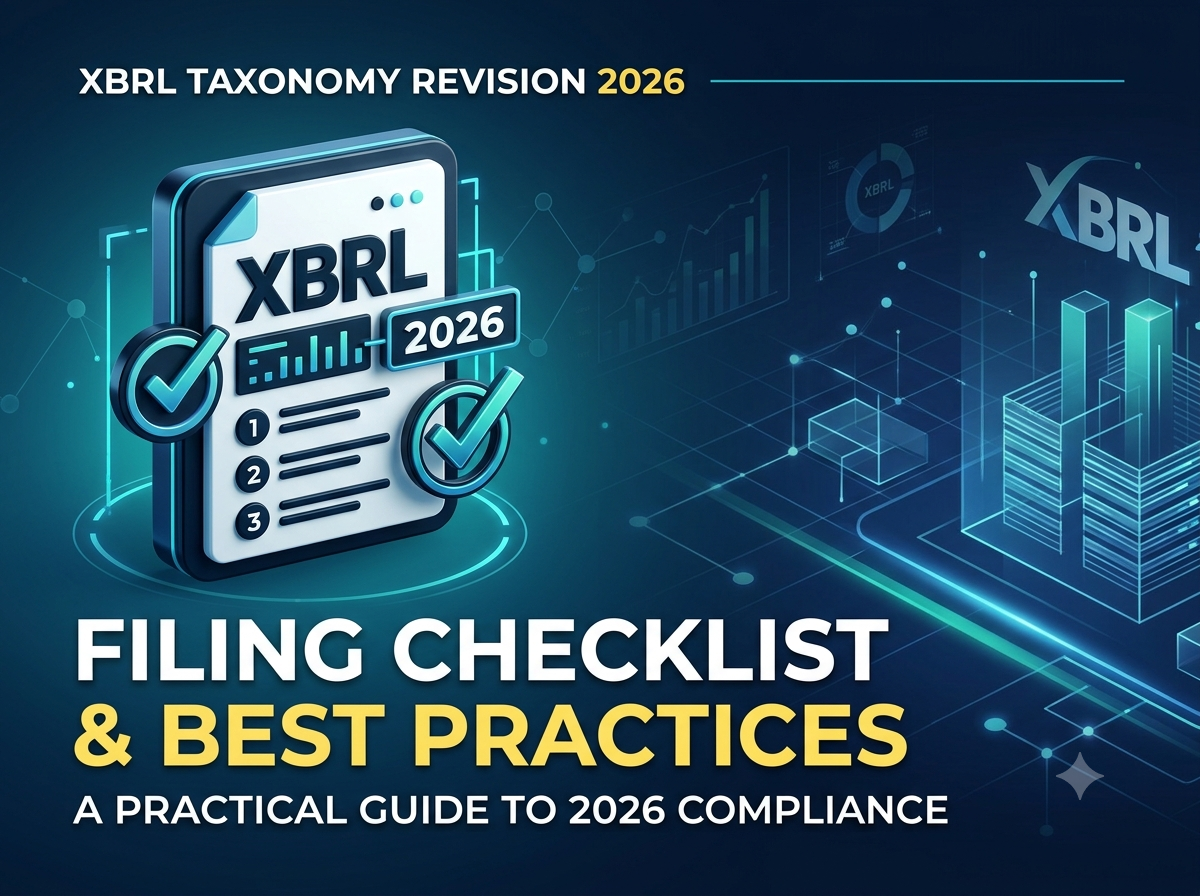
A practical checklist before you file
1. Download the current taxonomy fresh — don’t reuse last year’s file. MCA updates the taxonomy periodically and even small element changes can cause validation failures if you’re mapping against an outdated version. Pull it directly from the MCA XBRL portal.
2. Reconcile your financial statements against the new elements before tagging begins. Walk through the five changed areas above against your actual FY 2025-26 statements. If you have lease modifications, related-party restructuring, segment changes, or crypto/VDA holdings, flag those line items early so your tagging team isn’t discovering them mid-process.
3. Confirm your CSR applicability and pull structured CSR data separately. If Section 135 applies to you, get your CSR spend, implementing agency details, and unspent amounts organised in a format that maps cleanly to the mandatory CSR fields in AOC-4 XBRL — this data needs to match your Board’s Report exactly, so reconcile the two before filing.
4. Run the instance document through MCA’s free validation tool before final submission. This catches structural and mapping errors early. It’s a basic step, but it’s also the one most commonly skipped under filing-deadline pressure, and it’s the cheapest possible insurance against a rejected SRN.
5. Cross-check tagged figures against the audited and board-approved financial statements, not a working draft. XBRL tagging should happen only after the auditor’s report and board approval are final. Tagging against a draft and then patching numbers later is where most reconciliation errors creep in.
6. Verify the filing is being submitted on the MCA V3 portal, not V2. With V2 now decommissioned, ensure your XBRL preparation software and internal workflow are aligned to V3’s upload and validation process, which differs slightly in file handling from the legacy portal.
7. Keep the digital signature certificate of your authorised signatory current and tested well before the deadline. DSC issues are a disproportionately common last-minute filing blocker, and they’re entirely avoidable with a quick check a few weeks out.
8. Retain your acknowledgment and instance document securely — you’ll need both for audit trail purposes and in case a revision becomes necessary; MCA does permit revised XBRL filings if an error is discovered after submission.
The bigger picture
None of these changes are dramatic on their own, but XBRL filing is one of those compliance tasks where the failure mode is binary — either your instance document validates and files cleanly, or it doesn’t, and you’re racking up ₹100-a-day penalties while your compliance team scrambles. Building the new taxonomy elements into your process now, rather than discovering them during the crunch before your AGM deadline, is the difference between a routine filing and a stressful one.
This article is intended as general compliance guidance. Companies should confirm the exact taxonomy version and applicability criteria on the official MCA XBRL portal before filing, and consult their auditors or compliance advisors for company-specific guidance.