The 2026 Corporate Laws amendment has made one of the biggest changes in recent years for private companies in India by sharply expanding the small company threshold. This is not a cosmetic change in definition. It can redraw compliance obligations for thousands of businesses that were earlier treated as regular companies even though their scale was still relatively modest.
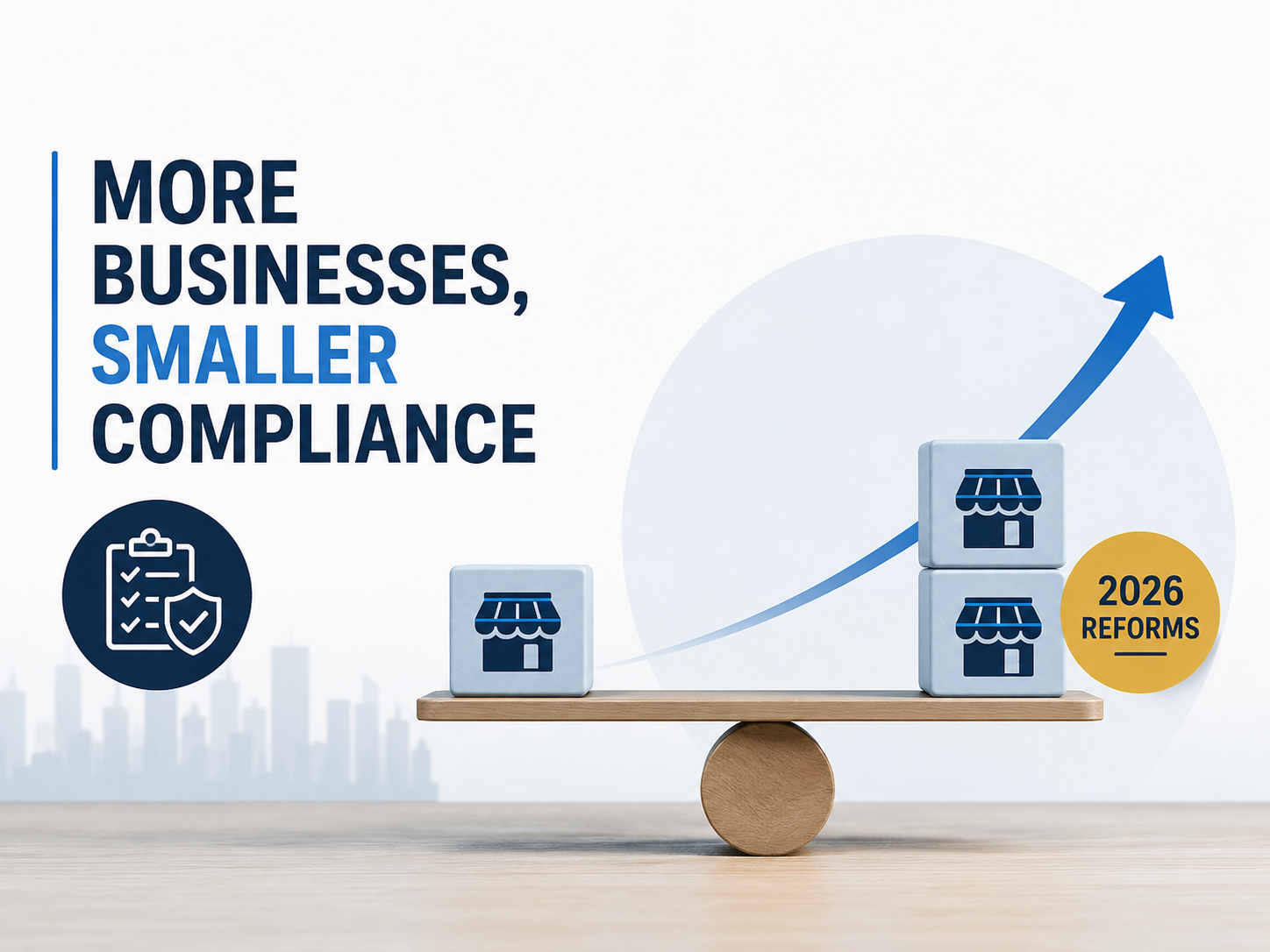
Under the proposed amendment, the threshold for small companies is raised from a much lower base to a far wider band, with the paid-up share capital ceiling moving to Rs 20 crore and the turnover ceiling moving to Rs 200 crore. That means many more private companies may now fall within the small company category if they satisfy both conditions.
The practical impact is immediate. Companies that previously had to follow a heavier compliance framework may now qualify for a simpler regime, which can reduce paperwork, improve operational efficiency, and lower the secretarial burden on management teams.
Why the change matters
The small company category has always served a policy purpose. It recognises that not every private company operates at the scale of a large corporate house, and smaller businesses should not be forced to carry the same compliance weight as larger firms. The 2026 amendment appears to push that idea much further by making the eligibility band much broader.
This matters especially in India’s mid-market segment. A large number of businesses grow steadily in turnover and capital structure without ever becoming truly large from a governance standpoint. For such companies, the old threshold often felt outdated and unnecessarily restrictive.
The new limit attempts to correct that mismatch. It acknowledges that the Indian corporate base has changed and that compliance should be proportionate to business scale, ownership structure, and risk profile.
Who newly qualifies
The most obvious newly eligible companies are private companies with modest or moderate paid-up capital and turnover that were previously just above the older limit. Many family-run companies, closely held service businesses, and founder-led growth companies are likely to benefit.
A company does not qualify merely because one threshold is satisfied. Both the capital and turnover limits must be met. So if a business has low paid-up capital but high turnover, or high capital but turnover above the ceiling, it will still remain outside the category.
This point is important because many business owners tend to look only at one number. In reality, small company status is a combined test, and secretarial or finance teams need to check both figures carefully before concluding eligibility.
The change may also help companies that have grown in business volume but not in organisational complexity. For example, a private consultancy, niche manufacturer, or specialised technology service provider may have a fairly healthy turnover but still operate with a lean internal structure. These are the kinds of businesses that can benefit most from lighter compliance treatment
Compliance relief expected
The biggest attraction of small company status is reduced compliance pressure. While the exact benefits still depend on the final legal text and the applicable rules, the general direction is clear: the law wants to make life easier for companies that fall into this bracket.prsindia+1
That usually means fewer procedural burdens, simpler disclosures, and a more manageable annual compliance cycle. For management, it can mean less time spent on administrative filings and more time focused on business growth.
For company secretaries, the benefit is equally practical. Less repetitive compliance can free up bandwidth for higher-value governance work such as contract review, board coordination, due diligence support, internal policy drafting, and member communication.
That said, reduced compliance does not mean zero compliance. The company still has to maintain proper records, file mandatory forms, and preserve the discipline needed to avoid later default. So the relief is real, but it is not a licence for casual governance.
Why policymakers likely expanded it
The broader policy idea behind the amendment seems to be ease of doing business. India has long sought to simplify corporate compliance for companies that are important to the economy but not large enough to justify a heavy regulatory load.
The threshold revision also likely reflects the inflation of business scale over time. What once counted as a large turnover or capital base may no longer be unusual in today’s market. Updating the threshold keeps the law aligned with commercial reality instead of freezing it in an older economic environment.
There is also a regulatory efficiency argument. When the law separates smaller businesses from larger ones more intelligently, regulators can focus more attention on companies with bigger public interest or governance risk. That is a smarter allocation of oversight resources.
What company secretaries should do now
A company secretary should start by reviewing the latest financial position of every private company under supervision. Paid-up capital and turnover need to be checked together, not in isolation.
The next step is to compare those figures with the amended thresholds and determine whether the company now qualifies as a small company. If it does, the compliance calendar should be updated immediately so the company can capture the benefit without waiting until year-end.
It is also wise to review board notes, shareholder communication templates, annual filings, and internal compliance checklists. Once a company enters a new category, its legal documentation should reflect that status consistently across departments.
Another important task is internal communication. Promoters and directors often assume that category changes are automatic and self-explanatory, but in practice there may be planning implications for audit strategy, recordkeeping, and corporate governance. The CS should explain these implications early and clearly.
Risks of misunderstanding the threshold
One risk is assuming that the new limit automatically applies without checking the final legal position and effective date. Another risk is overreading the benefit and treating the company as “less regulated” in every sense. Neither approach is correct.
There may also be companies sitting near the threshold line where classification is not obvious. In such cases, careful interpretation of paid-up capital, turnover, and the relevant year’s figures becomes crucial. A careless assumption could lead to wrong filings or incorrect internal disclosures.
That is why this change is not just a legal update. It is a classification exercise, a compliance planning exercise, and a documentation exercise all at once.
A useful way to explain it
If you are writing for a general business audience, the simplest way to explain the amendment is this: the law is widening the doorway into the small company category so more genuine mid-sized private businesses can move into a lighter compliance lane. That explanation is easy to understand without losing legal accuracy.
If you are writing for professionals, you can go a step further and explain that this change reflects a shift toward proportional regulation. The law is not lowering standards; it is trying to match compliance intensity with company scale more sensibly.
Final takeaway
The small company threshold increase is one of the most business-friendly parts of the 2026 corporate law changes. It could bring a large number of private companies into a simpler regulatory bracket, provided they meet both the capital and turnover conditions.
For company secretaries, this is the moment to identify clients or employers who may now qualify, update the compliance framework, and ensure the new status is reflected consistently across filings and internal records. The companies that prepare early will benefit most from the change.